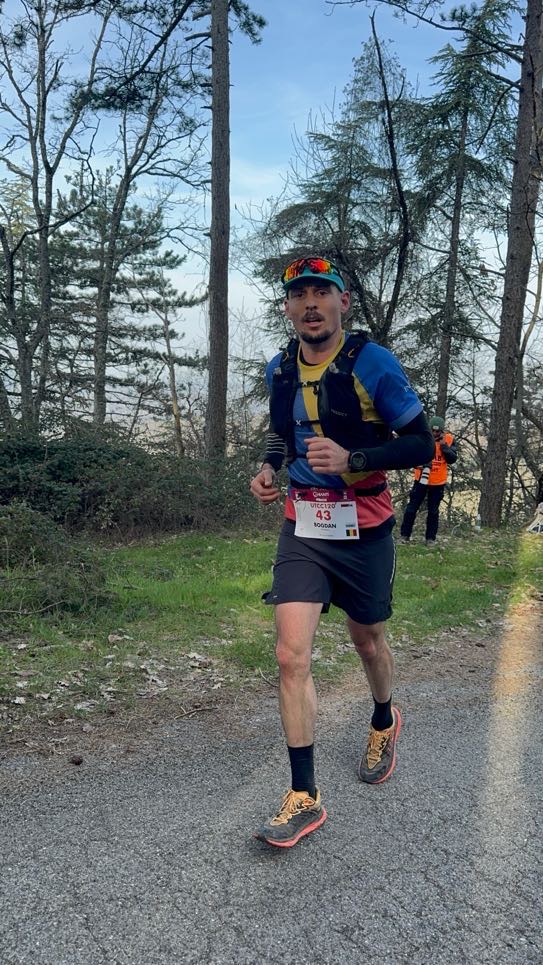
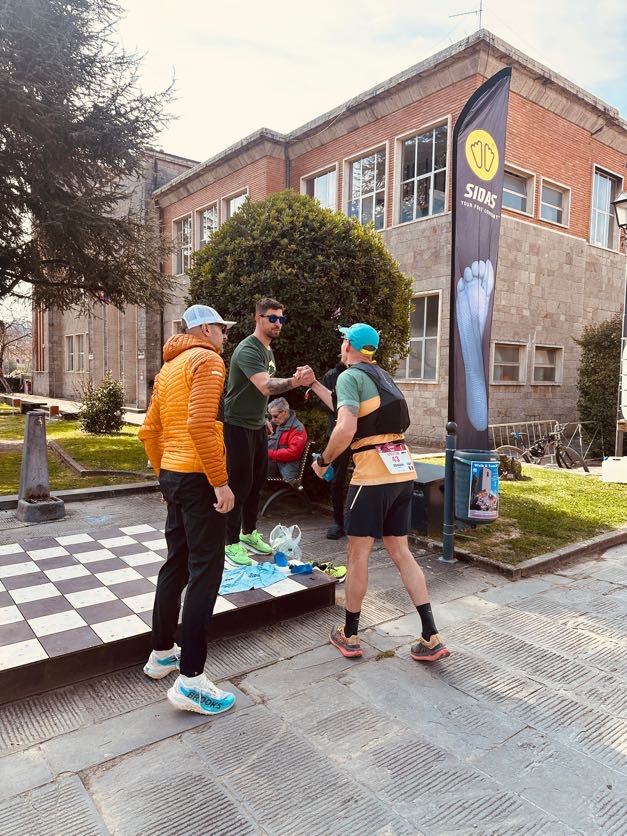
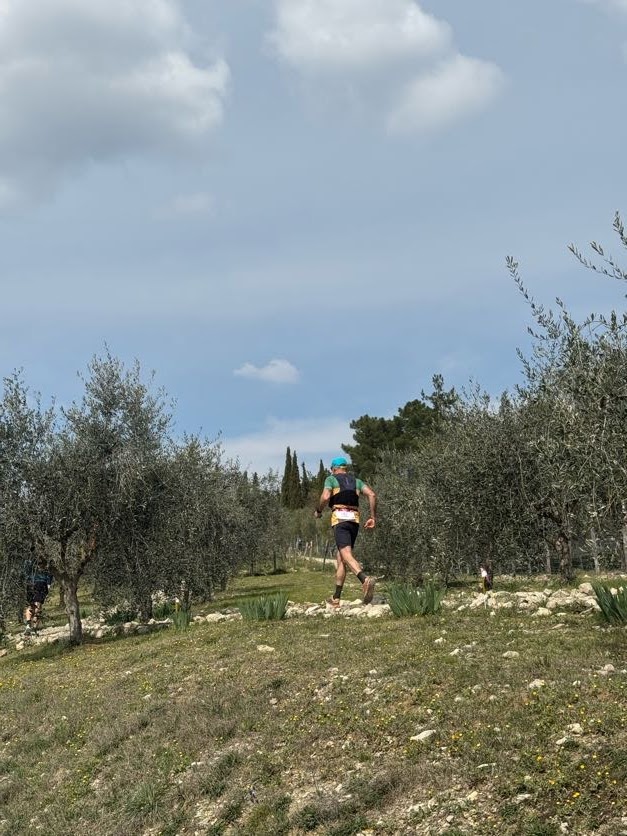
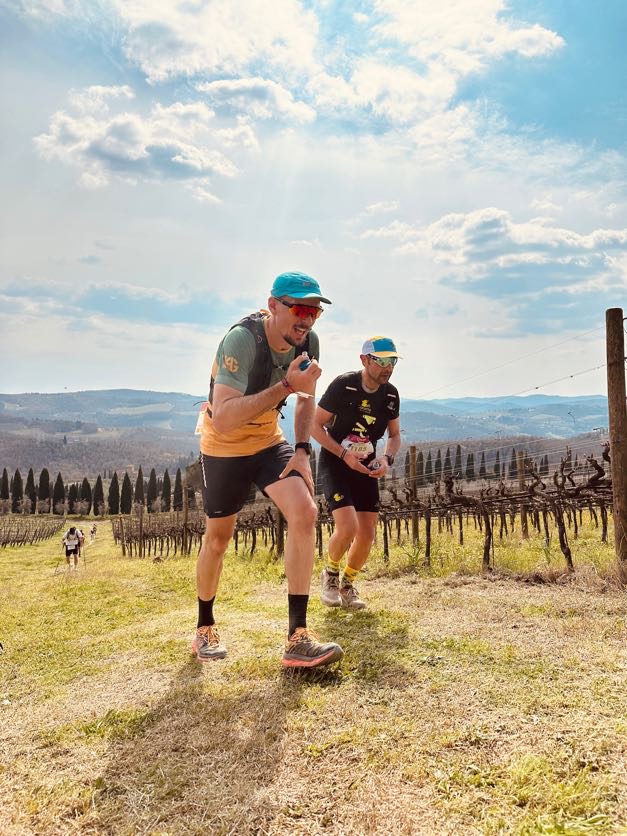
10 questions. His raw answers. no polishing.
1. Q: When did it get dark for you? Your lowest point
A: Something happened to me around km 65, exactly like at CCC – that’s where I mentally broke. I felt like I had no energy and the desire to run had been gone for a while. Until km 75, when I saw Silviu and the team, I had a really tough fight with myself. Maybe I knew I was only halfway and it was going to get harder from there, even though I was eating well and didn’t have any real issues.
2. Q: Where did you lie to yourself that you’re “fine” but you weren’t?
A: To get past that critical point I had a lot of negotiations with myself. Then on the last part, which was supposed to be 15km of descent, my quads had “left the chat” a long time ago and I kept myself distracted from the pain with songs and prayers.
3. Q: What almost broke you?
A: The terrain, which in many places was much tougher than I expected. And the final descent.
4. Q: What saved you in that moment?
A: The thought that I run on much more technical terrain than this, and on the last descent suffering is part of the glory. Also, I was in the top 10 and I wouldn’t have wanted that taken away from me.
5. Q: What part of the race would people never see on Social Media?
A: On the internet everything is nice and glorious, but the moments of loneliness are the hardest, and also the most valuable. Those are the moments when you strip yourself of everything – sins and thoughts – and accept your condition. It’s the most beautiful feeling to be able to be honest with yourself, something that feels hardest to achieve in “normal” conditions.
6. Q: What actually worked (nutrition, pacing, gear)?
A: I ate more than I planned, and that was one of my fears, especially after CCC where I managed to vomit in 3 languages across the 3 countries we passed through. I drank enough water, actually more than I needed, since I went to the bathroom 4–5 times. But better hydrated than dehydrated. Having so many good and capable people at the support points helped a lot and gave me a big confidence boost.
7. Q: What completely didn’t?
A: I didn’t have anything I couldn’t control. Even the mental drifts I kept under control – maybe that’s why I had such a good race.